
AI-powered ‘electronic nose’
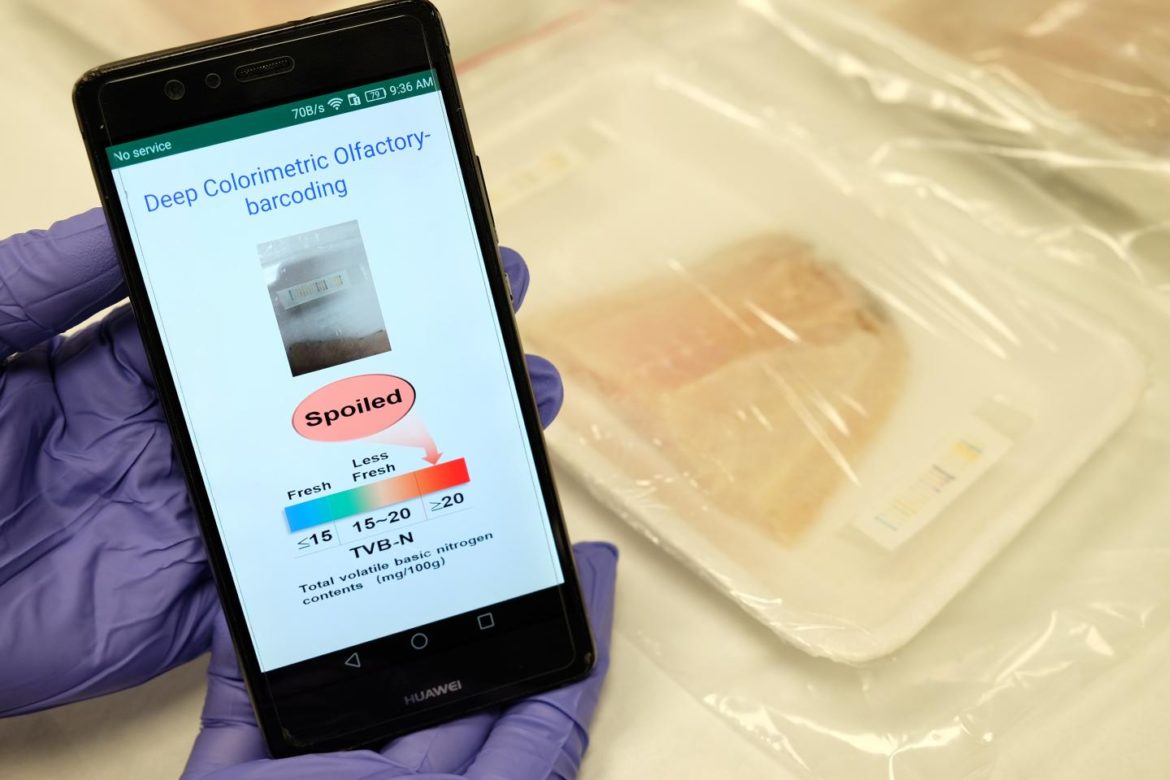
‘Scientists have invented an artificial olfactory system that mimics the mammalian nose to assess the freshness of meat accurately. The ‘electronic nose’ comprises a ‘barcode’ that changes color over time in reaction to the gases produced by meat as it decays, and a barcode ‘reader’ in the form of a smartphone app powered by artificial intelligence.
Written content by Nanyang Technological University via Science Daily
The ‘electronic nose’ comprises a ‘barcode’ that changes color over time in reaction to the gases produced by meat as it decays, and a barcode ‘reader’ in the form of a smartphone app powered by artificial intelligence.
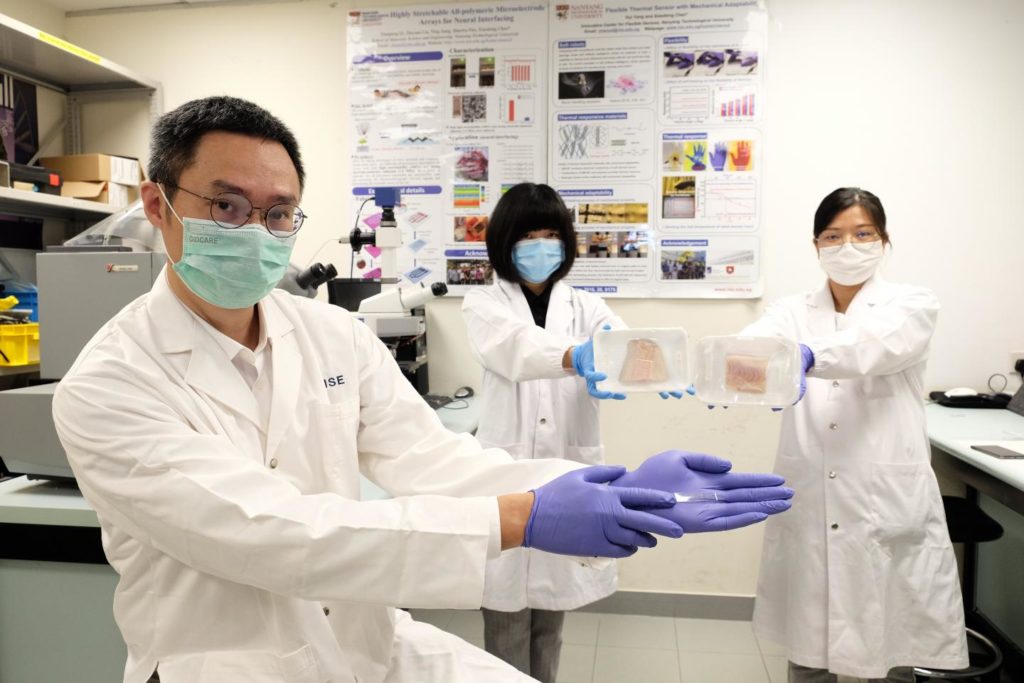
A team of scientists led by Nanyang Technological University, Singapore (NTU Singapore) has invented an artificial olfactory system that mimics the mammalian nose to assess the freshness of meat accurately.
The ‘electronic nose’ (e-nose) comprises a ‘barcode’ that changes colour over time in reaction to the gases produced by meat as it decays, and a barcode ‘reader’ in the form of a smartphone app powered by artificial intelligence (AI). The e-nose has been trained to recognise and predict meat freshness from a large library of barcode colours.

When tested on commercially packaged chicken, fish and beef meat samples that were left to age, the team found that their deep convolutional neural network AI algorithm that powers the e-nose predicted the freshness of the meats with a 98.5 per cent accuracy. As a comparison, the research team assessed the prediction accuracy of a commonly used algorithm to measure the response of sensors like the barcode used in this e-nose. This type of analysis showed an overall accuracy of 61.7 per cent.
The e-nose, described in a paper published in the scientific journal Advanced Materials in October, could help to reduce food wastage by confirming to consumers whether meat is fit for consumption, more accurately than a ‘Best Before’ label could, said the research team from NTU Singapore, who collaborated with scientists from Jiangnan University, China, and Monash University, Australia.

Co-lead author Professor Chen Xiaodong, the Director of Innovative Centre for Flexible Devices at NTU, said: “Our proof-of-concept artificial olfactory system, which we tested in real-life scenarios, can be easily integrated into packaging materials and yields results in a short time without the bulky wiring used for electrical signal collection in some e-noses that were developed recently. Read more from Science Daily.
Here’s a famous movie clip about a futuristic nose cloning: Enjoy watching!
Follow News Without Politics for more interesting and amazing, important, and relevant U.S. and world news stories plus health, entertainment, sports, weather, food and more without media bias.
Stay informed daily. unbiased news fair and balanced, ahead of influence.